ideia-errada

The problem

Good ideas can still lead to bad decisions.

     A product can be positioned in the wrong territory.

     A positioning can enter a space already owned by someone else.

     An innovation can solve a problem that does not really matter.

     A campaign can communicate without moving the brand forward.

     A launch can reach the market without enough differentiation.


    The cost shows up in execution, but the mistake often begins with the decision.

What Atlas does

When there are several possible paths, Atlas helps identify which one deserves to move forward and why.

Compare
Alternatives, hypotheses and territories side by side, with explicit criteria and clearly defined weights.

Reveal
Risks, vulnerabilities and opportunities that are often missed when analysis is fragmented.

Guide
What to move forward with, adjust, test or reconsider, supported by a grounded recommendation and clear next steps.

Better evidence. Better-grounded decisions.

The Atlas process is simple and straightforward.

From the strategic question to the recommendation, each step organizes evidence to support a better-grounded decision.

1

Challenge Definition

We align on the decision that needs to be made.
2

Setup

We define criteria and sources before looking at the results.
3

Collection & Analysis

We turn scattered signals into structured evidence.
4

Diagnosis

We compare options and map risks and opportunities.
5

Recommendation

We present a clear recommendation supported by traceable evidence and next steps.
duvidas

6 questions, 6 modules

Every decision starts with a question.

     Portfolio Intelligence: Where is there overlap or opportunity?

     Concept & Positioning: Which positioning has the strongest potential?

     Equity Diagnosis: Where is the brand vulnerable?

     Launch Readiness: Are we ready to launch?

     Fit Test: Is this idea worth investing in?

     Campaign Signal: Is this direction aligned with the brand’s future?

Where the intelligence comes from

A decision rarely depends on a single source.

Each challenge requires a different combination of sources, selected according to the decision that needs to be made.

MARKET

AUDIENCE

COMPETITION

CLIENT DATA

REASEARCH

SCIENCE

CULTURE

BRAND

The principle remains the same: use evidence that is relevant to the question, identify where it comes from and clearly state the limitations of the analysis.

The Atlas Decision principle

What is the decision based on?


• Recommendations come with a clear rationale.
• Evidence comes from identifiable sources.
• Hypotheses can be challenged.
• Alternatives can be compared.
• Limitations are made explicit in the final deliverable.

com-base-em-que

The value we deliver

We don't just deliver more information.
We bring greater clarity to the decision.

Clarity to choose
Better understand the available options and what sets each one apart.

Confidence to defend
Explain why a particular direction deserves to move forward, supported by traceable evidence.

Direction to act
Know what to move forward with, adjust or validate, without leaving the decision unresolved.

recomendação

Who is Atlas for?

For anyone who needs to recommend a direction
and explain why.

    MARKETING • BRANDING • STRATEGY • INNOVATION • PRODUCT • PORTFOLIO • AGENCIES • CONSULTING FIRMS


    Atlas Decision can work directly with companies or as an integrated decision intelligence layer within agency and consulting projects.

Who's behind Atlas

Science, strategy and creativity at the same table.

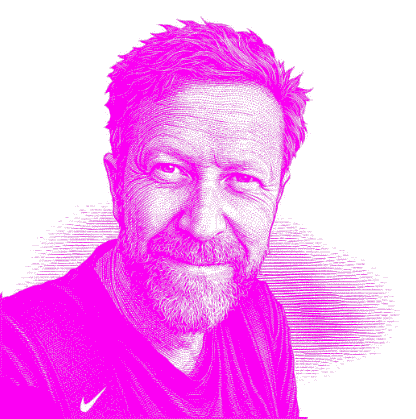
Art director and creative strategist with a background in advertising, design, shopper experience and entrepreneurial ventures.

Celso Costa

Celso Costa

Strategy, branding and creativity

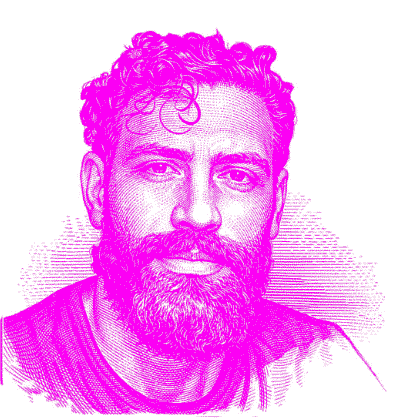
Mathematician and data scientist specializing in analytical modeling, market intelligence and decision systems.

Lucas Dantas

Lucas Dantas

Data science and analytical modeling

Strategist with 20+ years connecting brands, business and communications to drive innovation and business transformation.

Ralph Uehara

Ralph Uehara

Strategy and business transformation

Frequently asked questions

No. Atlas organizes and connects evidence, including existing research, to support a specific decision.

Each piece of evidence is assessed for its source and quality. The recommendation makes clear how strongly it is supported, including where uncertainty or limitations remain.

Typically 2 to 6 weeks, depending on complexity.

Atlas uses data solely for the purpose defined for each project, and only the information needed to address the hypotheses and decisions agreed with the client. Client data is separated by project, access is restricted, and the data is not used for Atlas’s own purposes, model training or other clients.

Yes. Atlas can work as an integrated decision intelligence layer within an ongoing project.

No. We start with the decision you need to make, not with the data you already have. The question determines which sources and evidence are relevant to support the decision.

What important decision do you need to make right now?

Let’s talk :)

formulario